 Business License

Detailed Introduction to Great Lakes Fire-Resistant Hydraulic Fluid
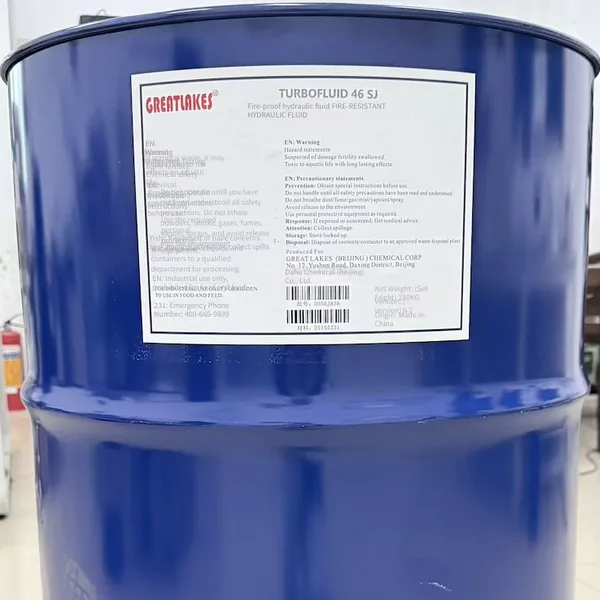
Great Lakes Fire-Resistant Hydraulic Fluid is a high-performance phosphate ester-based fire-resistant hydraulic oil produced by Great Lakes Chemical Inc. (USA) with Great Lakes Chemical (Beijing) Co., Ltd. as the domestic supplier. Its core component is high-quality triaryl phosphate derived from xylenol fractions, specifically designed for turbine electro-hydraulic control systems (EHC). It boasts advantages such as a high autoignition temperature, excellent oxidation stability, and outstanding fire-resistant properties, making it suitable for high-temperature, high-pressure, and high fire-risk scenarios.
I. Core Characteristics and Technical Parameters
(I) Core Advantages
1. Ultimate Fire Resistance: With an autoignition temperature of 545℃ (per ASTM D92 standard) and a maximum temperature resistance of 700℃, it complies with ISO 12922 (Type HFDR) and ASTM 4293 standards. It can effectively prevent fires caused by oil leakage contacting high-temperature surfaces, adapting to high fire-risk environments.
2. Excellent Physicochemical Stability: It exhibits superior oxidation stability, with the acid number strictly controlled at 0.04 mgKOH/g (per ISO 6619 standard). This effectively prevents the decomposition of phosphate esters when contaminated by water, significantly extending the service life. It also has strong adaptability to a wide temperature range, maintaining good fluidity in low-temperature environments and stable performance at high temperatures.
3. Outstanding System Compatibility: Foaming tendency, air release property, and demulsibility have been precisely regulated to fully meet the specifications of turbine manufacturers and adapt to high-precision servo valves. It is compatible with various engineering materials, ensuring stable system operation.
(II) Key Technical Parameters (with Standard References)
Indicator Name | Specific Value | Test Standard |
Kinematic Viscosity (40℃) | 46.8 m㎡/s | DIN 51562 |
Kinematic Viscosity (100℃) | 5.5 m㎡/s | DIN 51562 |
Flash Point | 274℃ | DIN ISO 2592 |
Pour Point | -24℃ | DIN ISO 3016 |
Autoignition Temperature | 545℃ | ASTM D92 |
Density (20℃) | 1.132 g/ml | DIN 51757 |
Relative Density (20℃) | 1.14 | - |
Density (Converted, 20℃) | 1140 kg/m³ | - |
Acid Number | 0.04 mgKOH/g | ISO 6619 |
Moisture Content | ≤0.03% (w/w) | ISO 760 |
Demulsibility | 5 min | ISO 6614 |
Air Release Value (50℃) | 1.7 minutes | ISO 9120 |
Cleanliness | SAE A-6D Class 3 | ISO 4406 |
Chlorine Content | <10 ppm | DL/T 433-2015 |
Foam Test (24℃) | 10/0 | ISO 6247 |
Foam Test (93.5℃) | 0/0 | ISO 6247 |
Foam Test (Post-24℃) | 10/10 | ISO 6247 |
Resistivity (20℃) | 1×10¹⁰ OHM/CM | ASTM D5682-18 |
Color | Hazen 30 | ASTM D1500 |
Viscosity Index | 0 | DIN ISO 2909 |
(III) Compatibility Instructions
• Compatible Sealing Materials: Silicone, polytetrafluoroethylene (PTFE), fluororubber, etc.
• Incompatible Materials: Neoprene, natural rubber, butyl rubber, EPDM rubber, polystyrene.
• Prohibited Mixing: Water-glycol and emulsifiable hydraulic systems.
• Compatible Materials and Coatings: Carbon steel, polyethylene, polypropylene, Teflon.
II. Application Fields and Industry Standards
(I) Core Application Scenarios
1. Power Industry: Electro-hydraulic control systems of turbine units in thermal power plants and nuclear power plants (including various systems using high-precision servo valves). It has been widely adopted in nearly 700 power plants and over 1,400 units in China.
2. Industrial Manufacturing: Hydraulic systems in steel mills exposed to high temperatures, gas turbines, metallurgy, coal mines, and other high-temperature and high-pressure environments, serving as fire-resistant hydraulic oil and fire-resistant lubricant.
3. Other Scenarios: Various hydraulic systems requiring fire-resistant performance, especially high-risk scenarios where oil leakage or pipeline rupture may cause oil to contact high-temperature surfaces.
(II) Certifications and Compliance Standards
• Chinese Standards: DL/T 571-2014, DL/T 433-2015
• International Standards: ISO 12922 (Type HFDR), ASTM 4293, ASTM D92, ASTM D5682-18
• Other Specifications: Meets the technical requirements of all major turbine manufacturers; complies with the chemical catalog requirements of countries/regions such as AICS, IECSC, DSL, EINECS, ENCS, KECI, PICCS, and TSCA.
III. Usage and Maintenance Guidelines
(I) Storage and Operation Specifications
1. Storage Conditions: Use specialized containers (barges, drums, tank trucks, rail tank cars), keep tightly sealed, and store in a cool, well-ventilated place. Containers and related equipment must be grounded and bonded to prevent electrostatic accumulation.
2. Transportation and Loading/Unloading: Loading, unloading, and transportation shall be conducted at room temperature with normal pressure. Avoid co-storage and co-transportation with mineral oil and water-glycol hydraulic oil to prevent contamination.
3. Operation Requirements: Use specialized equipment for regeneration and purification (such as diatomaceous earth filters). Sealing materials must meet the requirement of an expansion rate <15%. Avoid direct skin contact and prevent slipping hazards caused by spills and leaks.
(II) Maintenance Cycle and Monitoring Indicators
1. Regular Maintenance: Replace adsorbents every 3-6 months; conduct continuous regeneration and purification using specialized equipment to avoid performance impacts from contaminants.
2. Key Monitoring Indicators: Regularly test the acid number, particle size, moisture content, viscosity, cleanliness, chlorine content, etc., to ensure all parameters meet standard requirements and guarantee stable system operation.

Contact Us
Recommended Products
-
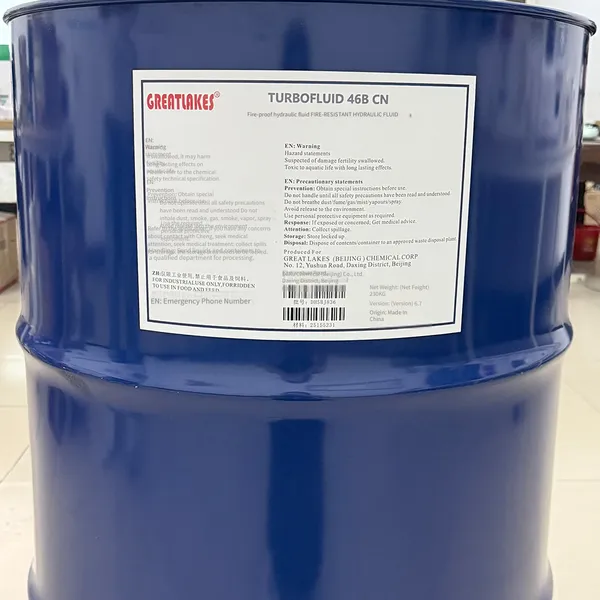
 GreatLakes Turbofluid 46B CN – High Temperature Resistance, High Pressure Resistance, Hydrolysis Resistance, Flame-Retardant Hydraulic FluidUS$ 4267 - 5077MOQ: 1 Barrel
 -
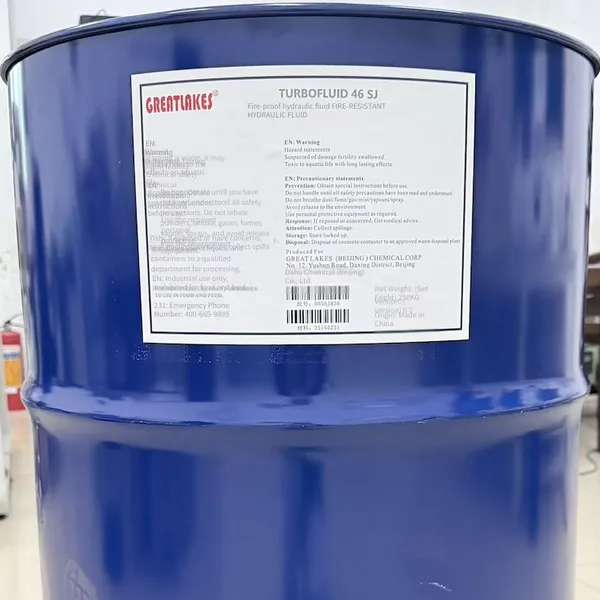
GreatLaks Turbofluid 46SJ– High Temperature Resistance, High Pressure Resistance, Hydrolysis Resistance, Flame-Retardant Hydraulic FluidUS$ 4267 - 5077MOQ: 1 Barrel
-
Great Lakes Fire-Resistant Hydraulic Fluid Turbofluid 46B CN Can Withstand High Temperatures up to 700℃US$ 4267 - 5077MOQ: 1 Barrel
-
Great Lakes Fire-Resistant Hydraulic Fluid Turbofluid 46SJ Can Withstand High Temperatures up to 700℃US$ 4267 - 5077MOQ: 1 Barrel
-
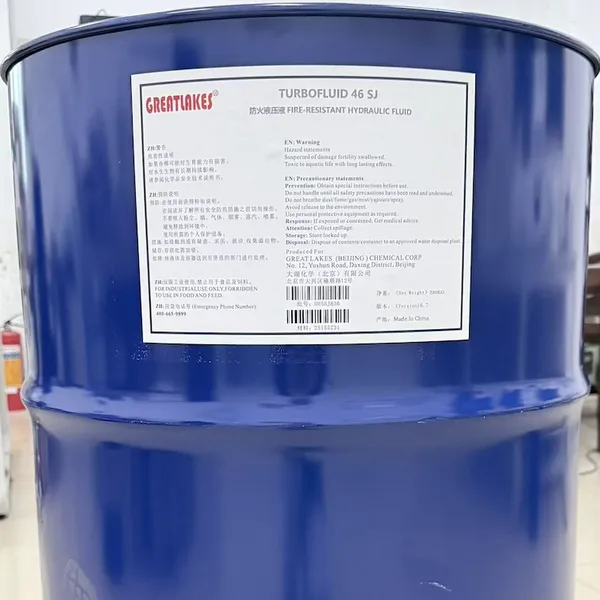
Great Lakes Phosphate Ester Fire-Resistant Hydraulic Fluid Turbofluid 46SJ — High Temperature & Pressure Resistant, Hydrolysis-ResistantUS$ 4267 - 5077MOQ: 1 Barrel
-
Great Lakes Phosphate Ester Fire-Resistant Hydraulic Fluid Turbofluid 46B CN — High Temperature & Pressure Resistant, Hydrolysis-ResistantUS$ 4267 - 5077MOQ: 1 Barrel
-
GreatLakes Turbofluid 46B CN Phosphate Ester Fire-Resistant Hydraulic Fluid, 230kg, for Steam Turbine Hydraulic Control SystemsUS$ 4267 - 5077MOQ: 1 Barrel
-
Great Lakes Turbofluid 46SJ Phosphate Ester Fire-Resistant Hydraulic Fluid, 230kg, for Steam Turbine Hydraulic Control SystemsUS$ 4267 - 5077MOQ: 1 Barrel
-
Great Lakes Turbofluid 46SJ Industrial Phosphate Ester Fire-Resistant Hydraulic Fluid for Turbine EHC SystemsUS$ 4267 - 5077MOQ: 1 Barrel
-
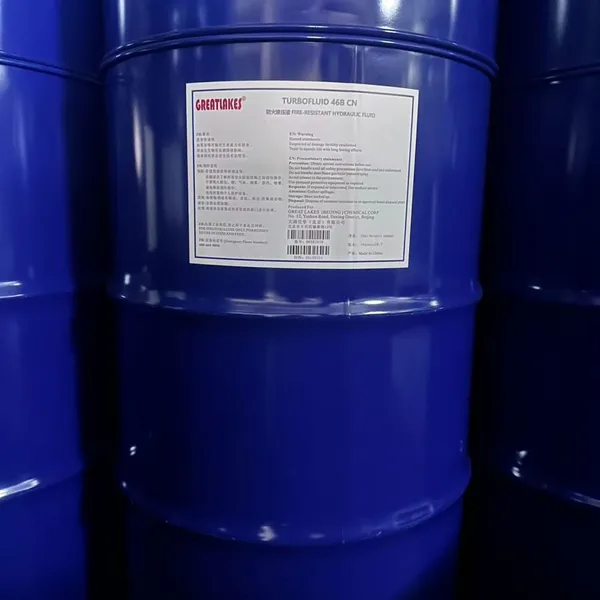
Phosphate Ester-Based Flame-Retardant Hydraulic Oil,GREATLAKES Turbofluid 46B CN Fire-Resistant Fluid,High Temperature and High Pressure ResistanceUS$ 4267 - 5077MOQ: 1 Barrel
-
Great Lakes Turbofluid 46SJ Fire-Resistant Hydraulic Fluid, Specially Designed for Steam Turbine Electro-Hydraulic Control SystemsUS$ 4267 - 5077MOQ: 1 Barrel
-
Great Lake Turbofluid 46bcn Phosphate Ester Fire-resistant Oil, Special for Steam Turbine Hydraulic Control SystemUS$ 4267 - 5077MOQ: 1 Barrel
-
Great Lakes Turbofluid 46SJ Phosphate Ester-Based Fire-Resistant Oil, With High Temperature and High Pressure Resistance, and a Flash Point of 270℃US$ 4267 - 5077MOQ: 1 Barrel